DRUG THE UNDRUGGABLE
Compete for $500K+ in prizes for breakthroughs in developing drugs for the cancer-associated transcription factor TBXT, also known as Brachyury.

Make history in drug discovery
25 million years ago a change in the TBXT gene set in motion the loss of tails in the ancestors of apes and humans.
A century ago the discovery of the TBXT gene (then called T or Brachyury) helped kick off the study of genes in development.
Over the past two decades TBXT has been linked to multiple cancers, and attracted interest as a promising drug target. But, like most transcription factors, its structure poses obstacles to development of small molecule inhibitors.
Today the TBXT Challenge aims to spur the application of innovative technologies to TBXT drug discovery — and set an example for other targets currently considered “undruggable.”
PRIZEs
Ligand prize
Our inaugural prize is for the discovery of potent TBXT ligands, which could serve as scaffolds for inhibitors or warheads for targeted protein degraders.
$500K+ prize purse
- $250K for ligands with KD of 300 nM or below
- $100K for ligands with KD below 1 μM
- Up to three teams can win
Prize details
The purpose of the ligand prize is to encourage efforts to leverage emerging AI, computational chemistry or other technologies to discover molecules that bind TBXT an order of magnitude more potently than currently known binders, which can serve as starting points for brachyury targeting drugs.
We invite investigators and companies worldwide with relevant approaches or technologies to join this competition.
Each team may compete for a total of up to $250K in prizes, including one prize at the 1 μM level AND/OR one prize at the 300 nM level.
If your team wins a 1 μM prize, you may continue competing for the 300 nM prize, but not for another 1 μM prize. If after winning a 1 μM prize and being awarded $100K, your team later qualifies for the 300 nM prize, you will receive an additional $150K for a total award of $250K.
Prizes will be awarded until three teams win any prize or two teams are awarded the 300 nM prize, whichever comes first. Prizes will be awarded in the order in which compounds are received at CF Labs.
Note: the ligand prize is focused specifically on non-covalent compounds. However, the Chordoma Foundation seeks to encourage the application of multiple approaches and modalities to drugging TBXT and may be able to support such efforts through other mechanisms including in-kind assistance through CF Labs. Contingent on funding availability, subsequent prizes may be announced to reward key milestones in other areas or stages of TBXT drug discovery. Stay tuned or get in touch for more information.
Terms & conditions
Eligibility: This prize is open to companies and labs from academic, government or nonprofit institutions worldwide (except in countries subject to U.S. sanctions), or teams thereof.
Awards: Prizes are awarded at the sole discretion of the Chordoma Foundation, and may be subject to input from our scientific and technical advisors (under confidentiality obligations). Prizes will be issued as unrestricted grants from the Chordoma Foundation to the winners’ company or institution. Prizes may be split among multiple collaborators upon request. Prize funds can be used for any research, development or educational purpose at the recipient’s discretion.
Publicity: Identities of prize competitors will be kept confidential unless or until a competitor publicly discloses their participation. We will publicly announce prize winners after prizes are awarded and accepted. Prize winners may elect to keep their identity confidential by notifying us in writing before accepting the prize; in such cases, we will publicly announce that the prize has been awarded to an anonymous recipient.
The Chordoma Foundation reserves the right to modify all prize terms at any time to most effectively achieve the goals of the challenge; any changes will be reflected on this website.
Free biophysical evaluation
Binding affinity of submitted compounds will be measured via SPR in CF Labs at no cost, with resulting data returned confidentially.
Evaluation criteria
Compounds will be evaluated by CF Labs personnel for binding to purified, full-length TBXT via surface plasmon resonance (SPR), and hits will be validated in a six-point titration. Appropriate positive and negative controls will be included in each assay run. If on first evaluation a compound is found to have KD < 5 μM with saturable binding, it will be evaluated in two additional replicates. If binding curves are of questionable or poor quality, additional replicates may be performed at our discretion.
For a molecule to qualify for a prize, at least two out of three assay replicates must meet or exceed the relevant affinity threshold (1 μM or 0.3 μM) and demonstrate saturable binding.
Additionally, molecular structures meeting affinity criteria will be confidentially evaluated by an expert third-party chemist to confirm that they have suitable drug-like characteristics and lack problematic functionalities (e.g. using PAINS criteria), unless they are present by design. Compounds that do not conform to these guidelines may be considered with sufficient justification, which could include, for example, demonstrated acceptable DMPK properties.
Specific guidelines can be found here.
Submission instructions
Registration for the Ligand Prize challenge is now closed. All participants who have previously confirmed they will submit compounds to be received by CF Labs by the September 1, 2026 deadline are registered.
Each competitor (or team of competitors) may submit a total of up to 96 compounds in powder form. These may be split across up to three batches to allow for optimization of initial hits.
The following information is required to accept compounds for evaluation:
- A high-level description of the approach or technology used to identify the compounds
- Molecular mass and purity (minimum requirement: 90%) of each compound
- Compound storage instructions
- SDS or any special handling instructions
- Predicted binding site of each compound (if possible)
- Solubility prediction for each compound (preferred)
Our team will review this information and notify you if your submission is accepted for evaluation. If accepted, we will execute a material transfer agreement (MTA) with confidentiality provisions with you, and provide shipping instructions.
Once received at our lab, compounds will be resuspended and evaluated as soon as possible (typically within 2-4 weeks). Compounds must be soluble in DMSO at 10 mM and in aqueous buffer at 50 μM to qualify for evaluation. Standard approaches (such as heating and sonication) may be used to promote solubilization, however we reserve the right to refuse evaluation of any compound not meeting our solubility requirements.
Competitors with compounds found to have Kd <10 μM in their first or second batch submitted to the TBXT Challenge may step out of the Challenge and perform hit optimization under a sponsored research agreement (SRA) with CF Labs. In this scenario, the competitor will fund testing of up to two rounds of 60 compounds (up to a total of 120 compounds) in the SPR assay. If a two-fold increase in potency is achieved after these two rounds, up to two additional rounds of 60 compounds may be tested at the Chordoma Foundation’s discretion. After completing testing under an SRA, a competitor may re-enter the Challenge by submitting the remainder of their 96 allotted compounds for evaluation within the Challenge.
Commercialization friendly
Compound structures and associated data remain confidential. Inventors retain all IP and associated rights in submitted compounds.
Confidentiality
Any information shared with us about submitted compounds and any data generated in the course of evaluating submitted compounds will be kept confidential. If requested, we will execute a confidential disclosure agreement with you prior to receiving any information about your compounds.
We will remain strictly blinded to compound structures throughout the prize process, and explicitly request not to have any structures shared with us.
If compounds are found to meet affinity criteria, then we will pay an expert third-party chemist to confidentially review structures to confirm that they lack properties that would obviously prevent further optimization and eventual drug development.
Intellectual property
Our intent is for competing for the prize to be conducive to eventual commercialization of submitted compounds or their derivatives. As such, compounds are submitted under a material transfer agreement which protects the intellectual property (IP) rights of submitters. Competition for or acceptance of a prize(s) does not create any restrictions or obligations with respect to the submitter’s IP.
Submitters are free to file patents on submitted compounds at any point. Data generated in the course of evaluating the compounds may be used by submitters in patent applications and/or publications.
The deadline for registering intent to submit to the Ligand Prize has now passed. Please check back for further information, including about subsequent prizes. Contact us at TBXTchallenge@chordoma.org if you are interested in working with us.
TBXT
Attractive target,
uncommon opportunity
Pan-cancer
TBXT is aberrantly expressed in multiple tumor types — including breast, lung, colon and prostate — in which it is associated with malignancy, tumor progression and/or shorter survival [3].
Urgent need for an orphan disease
TBXT is the defining feature and most selective genetic dependency of a rare bone cancer called chordoma, for which there are no effective systemic therapies [4].
Streamlined development path
Enabling resources and preclinical capabilities offered by Chordoma Foundation (CF) Labs, and a clear path to approval in chordoma make development of TBXT drugs more tractable than many other targets.
get started
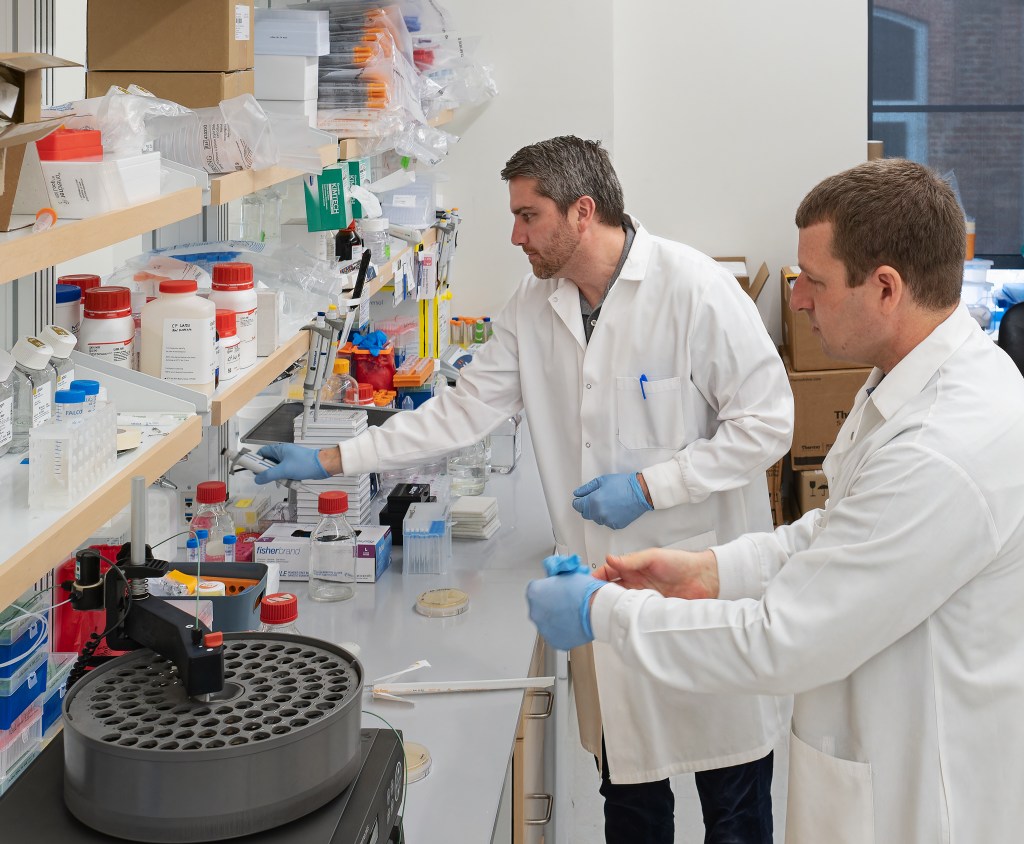
The TBXT Target Enabling Package created by the Structural Genomics Consortium provides a useful starting point for TBXT drug discovery, including the crystal structure of the DNA binding domain in complex with various chemical fragments.
CF Labs also offers various resources and assays to enable hit identification, as well as a suite of discovery biology, preclinical, and translational research capabilities to facilitate subsequent optimization and development of TBXT ligands.
FAQs
Who can participate in the challenge?
Companies, academic labs, government or nonprofit institutions, and individual researchers worldwide (except in countries subject to U.S. sanctions) are eligible to participate. Teams and joint applications are allowed.
What types of molecules are eligible for the TBXT Challenge ligand prize?
Non-covalent small-molecule ligands capable of binding TBXT with high affinity. Compounds must be ≥90% pure, submitted in powder form, and suitable for SPR-based evaluation. Teams may submit up to 96 compounds.
What is the process for initiating a submission?
- Email tbxtchallenge@chordoma.org to express interest. You will be connected with the TBXT Challenge team for an introductory discussion. Serious entrants will receive a MTA (Material Transfer Agreement) template and the compound submission form.
- Return the submission form. Once the submission form is received the MTA will be populated with compound identifiers.
- Execute the MTA.
- After the MTA is executed, ship compounds to CF Labs.
- Testing will begin once all submission materials and samples are received.
What data and materials must entrants provide for compounds to be evaluated?
Entrants must provide:
- A completed submission form (inclusive of compound ID, molecular mass, purity, solubility, and storage/handling instructions)
- Up to 96 non-covalent compounds in powder form (submitted across up to three rounds)
- Confirmation that each compound meets the ≥90% purity requirement
How does shipping work for TBXT Challenge submissions?
Entrants are responsible for arranging shipping of compounds to CF Labs for evaluation and covering shipping costs.
Compounds must be shipped in suitable vials (e.g., borosilicate, amber, or equivalent) and supplied in quantities sufficient to enable resuspension in at least 0.5 mL DMSO at 10 mM.
Additional detailed shipment instructions will be provided after MTA execution.
Compounds are officially considered submitted once all materials have been received at CF Labs.
How many compounds can be submitted?
Each team may submit up to 96 compounds across as many as three evaluation rounds.
How are compounds evaluated?
CF Labs conducts SPR-based binding assessments using purified TBXT under standardized, reproducible conditions. To ensure rigor and data integrity, compound metadata is reviewed prior to testing, and results may undergo an additional third-party chemistry review to confirm purity, suitability, and interpretation of binding outcomes.
How long will the evaluation take?
Evaluation timelines vary based on the number of compounds submitted and the current testing queue. Once all required materials are received and accepted, CF Labs will begin testing as capacity allows. Entrants will receive the results within 4 weeks of their submission entering the queue, except when the queue is very large and the number of compounds submitted exceeds a single day of testing.
What happens after I’ve submitted compounds?
Once your compounds and required materials are received, they enter CF Labs’ evaluation queue and receive a timestamp. Compounds are tested by SPR, and you will receive preliminary results and updates as testing progresses. These results can help guide planning for subsequent submissions, if applicable.
Does the Chordoma Foundation provide funding or support for synthesis or optimization?
Entrants are expected to handle their own compound design, synthesis, purification, and preparation for shipment. The TBXT Challenge is designed so that participants maintain full ownership and responsibility for their chemistry matter.
Will my data remain confidential?
Yes. Entrants retain ownership of their IP, compound structures remain blinded throughout the evaluation process, and all submissions are handled confidentially.
How will I know if I’ve won a prize?
Prize decisions are shared directly with entrants once all evaluation rounds for their submission are complete and results are finalized. Winners are notified by email and provided with next steps. Public announcements are made only after prize recipients have been informed and any required agreements are in place.
CREATED BY
The TBXT Challenge is an initiative of the Chordoma Foundation, a patient-driven nonprofit dedicated to finding better treatments, and ultimately cures, for chordoma.
As a small community with a big, urgent mission, we are compelled to pursue new and more efficient ways to advance science and overcome obstacles to new treatments.
Previously, we’ve had success using prizes to spur development of much-needed chordoma cell lines, and we are now applying the lessons learned to catalyze drug discovery for chordoma’s defining vulnerability, TBXT.
Seeking to bring the latest technological advances to bear on this task, we’ve established a suite of TBXT- and chordoma-focused biology capabilities in CF Labs intended to complement and unlock the computational and chemistry capabilities of leading-edge investigators and companies.
The TBXT Challenge is our call to those at the frontier of drugging difficult targets to join with us in identifying approaches that enable quantum leaps in the discovery of drugs for this important transcription factor.

SUPPORTERS
Sincere thanks to the individuals and organizations whose support of this challenge is bringing needed innovation to TBXT drug discovery and setting an example for other difficult targets.


Driving more breakthroughs
While our initial prize is narrowly focused on the critical milestone of discovering potent ligands, that’s just the beginning. With additional resources, we aim to launch subsequent prizes to incentivize innovation on more fronts, including the application of additional promising therapeutic modalities to TBXT. We invite those interested in accelerating that innovation to contact us about opportunities to contribute.
Why contribute?
A wave of new technologies with the potential to unlock progress against elusive drug targets like TBXT are being developed in hundreds of labs and companies worldwide. It’s impossible to even identify them all (some have not yet published or are in stealth mode), let alone predict which will ultimately be successful.
By contributing to the TBXT Challenge you will help to incentivize multiple teams to apply their talents, approaches and technology to this important endeavor.
For those who share our urgent desire to bring about TBXT therapies, this is an opportunity to accelerate needed breakthroughs that are otherwise improbable solely by funding individual projects.
For those interested in drugging transcription factors or other difficult targets, this is an opportunity to surface and rapidly demonstrate the utility of new approaches or technologies.
For those interested in using philanthropy to stimulate drug discovery in areas lacking substantial industry investment, this is an opportunity to pilot the use of a prize mechanism and generate learnings which could be applied to other diseases or targets.
How are contributions used?
In addition to the prize purse, contributions help to cover the costs of running and promoting the success of the challenge such as recruiting teams to compete, providing teams with enabling resources and assistance, and evaluating submitted compounds in CF Labs.
Are there different contribution levels and benefits?
We gratefully accept gifts of all sizes. For those interested, we offer multiple giving levels with distinct benefits such as named prizes, branding opportunities and recognition in various communications. Please contact us at tbxtchallenge@chordoma.org for more information.
JOIN US
Help us redefine what’s possible for undruggable targets.
Spread the word.
Share the TBXT Challenge with potential competitors, partners or sponsors in your network.
Connect with our team.
Email us to learn more about how to participate as a competitor or a sponsor.
Stay informed.
Sign up for email updates using the form below.
Sign up for email updates